Description
Livestock Profile
Overview
- Quarantine Method Summary
- Quarantine for at least 2 weeks with observation and treatment for common parasites.
- Disease Sensitivity
- Moderate
- Medication Sensitivity
- High
- Short Description
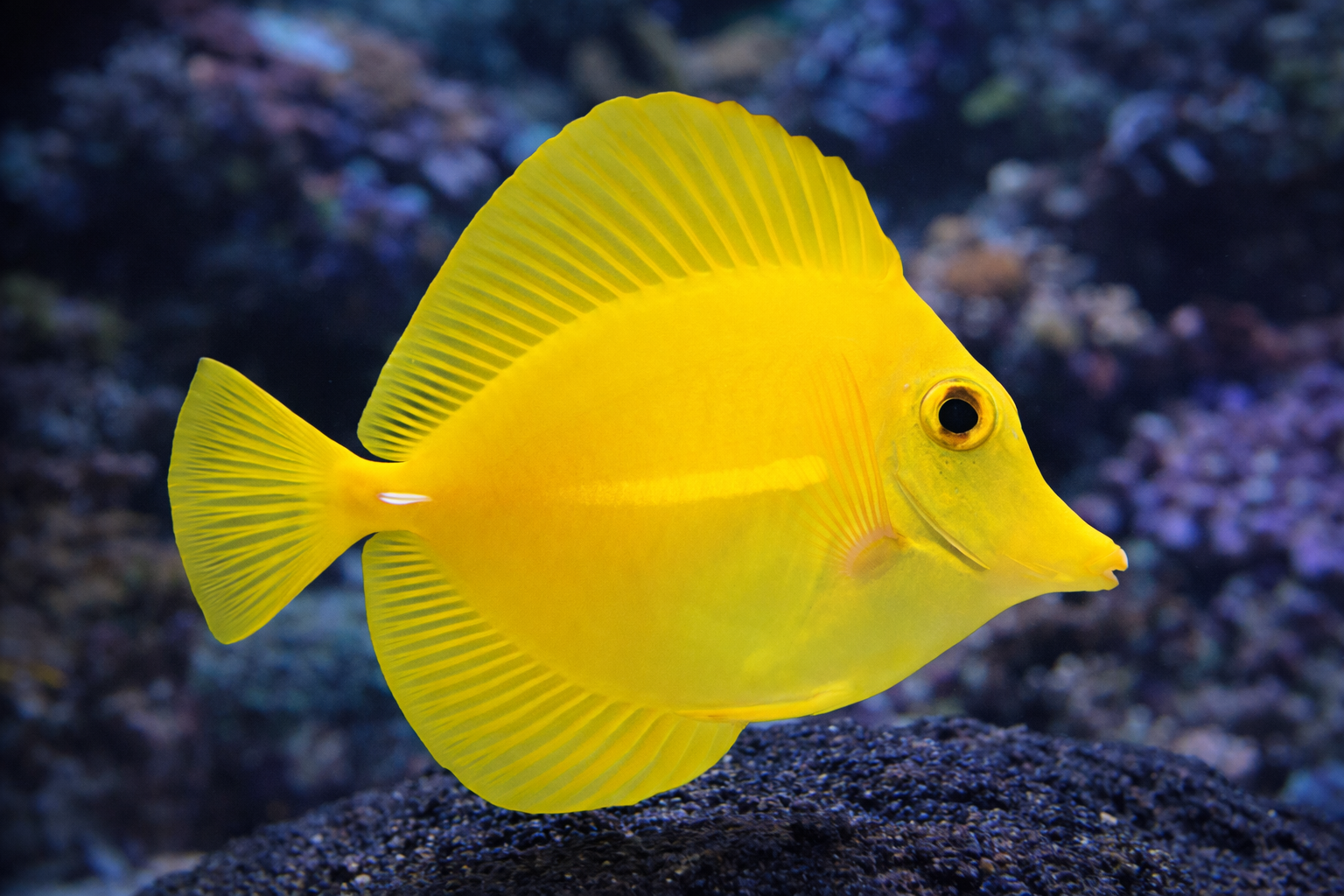
- The Yellow Tang is a vibrant, herbivorous fish known for its bright yellow color and active swimming behavior.
- Care Overview
- Requires a well-maintained reef tank with plenty of swimming space and hiding spots. Regular water changes and stable water parameters are essential.
- Compatibility Notes
- Generally peaceful but can be territorial with similar species. Best kept with other peaceful fish.
- Aquascape Notes
- Provide plenty of live rock for grazing and hiding spots.
- Special Requirements
- Requires a varied diet including algae and high-quality marine flakes or pellets.
- Quarantine Notes
- Monitor for signs of ich and other parasites; treat as necessary before introducing to the main tank.
Identity & Taxonomy
- Scientific Name
- Zebrasoma flavescens
- Genus
- Zebrasoma
- Species
- flavescens
- Authority Name
- Linnaeus
- Authority Year
- 1758
- Primary Common Name
- Yellow Tang
- Slug
- yellow-tang
- Native Region
- Hawaii, Pacific Ocean
- Native Habitat
- Coral reefs
- Organism Type
- Fish
- Environment Type
- Reef
Care & Behavior
- Adult Size
- 7 – 8 in (17.8 – 20.3 cm)
- Lifespan
- 5 – 10 years
- Minimum Tank Size
- 75 gal (283.9 L)
- Feeding Frequency
- 2-3 times per day
- Special Diet Notes
- Herbivorous; requires algae-based foods.
- Schooling Required
- No
- School Min Group
- 1
- Temperament
- Peaceful
- Activity Level
- High
- Diet Type
- Herbivore
Water & Environment
- Temperature
- 72 – 78 °F (22 – 26 °C)
- pH
- 8.1 – 8.4
- Salinity
- 1.02 – 1.03
- Specific Gravity
- 1.02 – 1.03
- Alkalinity
- 8 – 12
- Calcium
- 400 – 450
- Magnesium
- 1200 – 1350
- Flow Level
- Moderate to strong
- Lighting Level
- Moderate to high
- Nitrate Max
- 20
- Phosphate Max
- 0.03
- Water Type
- saltwater
Compatibility & Breeding
- Sexual Dimorphism
- Males have larger dorsal fins than females.
- Macroalgae Safe
- ✓
- Reef Safe
- ✓
- Invertebrate Safe
- ×
- Coral Safe
- ✓
- Shrimp Safe
- ×
- Snail Safe
- ×
- Predatory Risk
- ×
- Fin Nipper
- ×
- Territorial
- ✓
- Venomous
- ×
- Jump Risk
- ✓
- Escape Risk
- ×
- Bred In Captivity Common
- ✓
- Wild Caught Common
- ×
- Egg Layer
- ✓
- Livebearer
- ×
- Breeding Difficulty
- Difficult
Quarantine
- Recommended Duration
- 14 – 30 days
- Quarantine Required
- Yes
- Observation Only
- No
- Prophylactic Treatment
- Yes
- Copper Safe
- No
- Formalin Safe
- Yes
- Praziquantel Safe
- Yes
- Methylene Blue Safe
- Yes
- Hyposalinity Safe
- No
- Freshwater Dip Safe
- No
- Dip Protocol Summary
- Use a copper-based treatment if signs of ich are present; otherwise, observe for 2 weeks.
- Medication Notes
- Avoid copper-based medications unless absolutely necessary due to sensitivity.
- Isolation Requirements
- Isolate from other fish during quarantine to prevent disease spread.
- Food Training Needed
- No
- Acclimation Notes
- Acclimate slowly to prevent shock; use drip acclimation method.
- Common Qt Issues
- Ich, marine velvet, and other external parasites are common.
- Best Practice Summary
- Maintain stable water parameters and provide a varied diet to ensure health.
Common Names
| Name | Normalized Name | Language | Region | Primary | Sort |
|---|---|---|---|---|---|
| Yellow Tang | yellow tang | Yes | 0 | ||
| Tang Jaune | tang jaune | No | 1 |
Reviews
There are no reviews yet.